Showing posts with label Glenfiddich. Show all posts

Tuesday, December 1, 2009

Error in Terroir


"What region of the earth is not full of our calamities?" - Virgil


One of the most interesting aspects of learning about alcoholic beverages from around the world is the extent to which they reflect the cultural heritage and traditions of the people in the regions where they were developed. This is readily apparent in the ingredients used to create these drinks, represented in the use of indigenous flora, including fruit and vegetables: Agave used to create Tequila in Mexico, sugarcane used to make rum in the Caribbean, etc. The cultural aspect also becomes apparent in ceremonies (practices or etiquette) surrounding these drinks. This could include everything from drinking whisky from a quaich to the traditional lemon wedges and salt with Tequila shots. A Canadian-made television series called “The Thirsty Traveler” explores these associations for many well-known drinks and is highly recommended for anyone interested in the historical and cultural context of their liquor. If any readers out there are pursuing sociology or anthropology degrees, this would be a great thesis topic!


As important as the plants which constitute the main ingredients in the production of a particular liquors are, so too are the conditions under which they are grown. Growth conditions will alter the metabolism and therefore result in biochemical changes in the plants, particularly in the carbohydrate (sugar and starch) profiles. Connoisseurs are often able to identify the region which produced a given brand of liquor, based on distinctive elements in the taste. This "geographical" aspect of taste is most often associated with wine, and is referred to in the industry with the French word terroir. If you think about the limited range of growth conditions necessary to produce wine grapes (temperature, quantity of water) it is understandable how much emphasis could be placed on wine regions and the growth conditions of grapes within those regions. How subtle changes in these conditions result in significant changes in aroma and flavour is what makes wine production as much an art as a science.


In the whisky world, terroir has also traditionally been trumpeted as critically important. Most malts advertise exactly where they are being produced, as this provides them with some notoriety or links to particular areas traditionally associated with good whisky, such as the Scottish Highlands. But what is it that sets these regions apart when it comes to producing whisky?


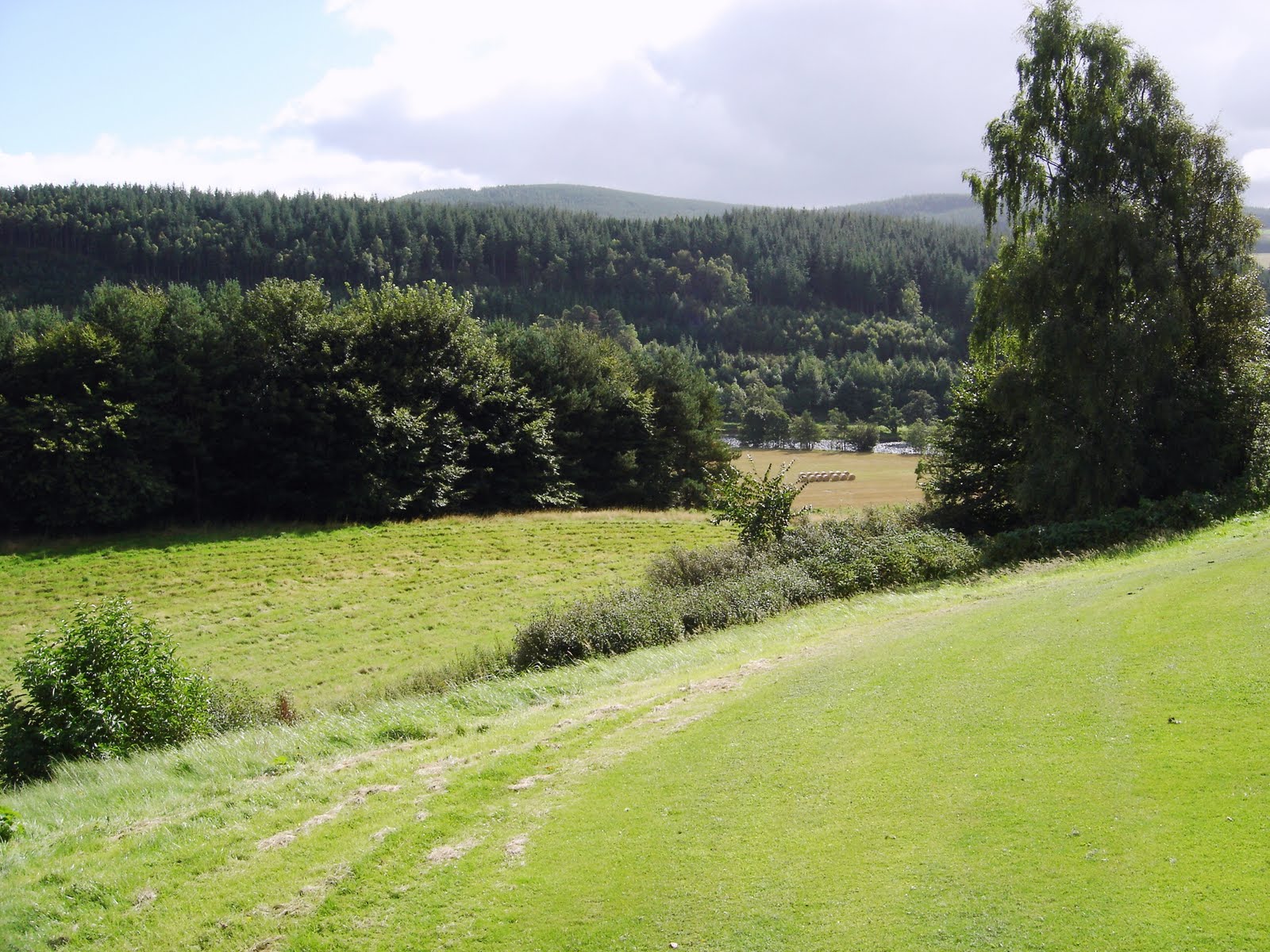
To understand regional distinction in the whisky world, we need to look at the important elements required to make (for example) malt whisky: Barley and water. Instead of grapes, it is the growth and type of barley as well as the availability of fresh, clean water. The speyside region of Scotland is a canonical example of prime conditions for whisky making: Water feeding from various sources into the river Spey is softened as it flows over granite beds, moderate temperatures suited to the growth of barley, and lots of little hills and valleys to hide illicit stills in! These prime conditions help explain why even to this day there is such a cluster of distilleries in this region – more than half of Scotland’s distilleries are considered “speyside”. The speyside “style” is represented by medium-bodied, complex whiskies with lots of malty, bread-like flavours. Many have honey, fruity and flowery notes as well. Prime examples are The Balvenie, Glenfiddich, Cragganmore, and Longmorn.

The peatiness and smokiness of various whiskies can be the result of flavours within the water source (which may be flowing through peat bogs), but they are more strongly associated with methods used to dry the germinated barley. Traditionally, huge ovens called “kilns” are used to generate heat and smoke for drying the barley prior to it being crushed into the powdery grist necessary for fermentation. On Islay, as there are not many trees on the island, blocks of peat were cut from the earth to use as a cheap fuel to fire the kilns instead of wood, charcoal or oil. The smoke generated from these kilns not only dried the barley but infused it with some of the flavours and aromas we associate with Islay malts. Some examples being Ardbeg, Laphroiag, Lagavulin, and Caol Ila.


I’ve offered two examples of “regional” characteristics of some Scotch malt whiskies. Other regions will be discussed in future posts, but the important point here is to realize that there are exceptions to these regional characteristics; ergo you can’t judge a particular malt simply by its country or region of origin. Bunnahabhain is a delicate, fruity Islay malt which goes its own way and doesn’t try to keep up with the Jones’ -- its peaty, smoky neighbours.

Are these regional distinctions still relevant today? Barley can be grown in different places and shipped to anywhere in Scotland. Likewise, the maltings (of the barley) can now be made to order with different levels of peatiness and smokiness, then shipped to any distillery in Scotland. Many scotches are not bottled at the distillery, but elsewhere and therefore use different water sources. For these and other reasons, many single malt whisky experts say that regional distinctions have no real merit anymore. In our modern globalized society, tequila could conceivably be produced in any country of the world capable of importing agave grown in Mexico and simulating the "conditions" of Mexican distilleries indoors. Should it still be called tequila?

Rules and legislation regarding the production and labeling of liquors help to maintain a certain distinction. Champagne, Cognac and Scotch whisky are all great examples of brand control with an emphasis on region. Check Wikipedia for the regulations regarding production of Bourbon. It serves as an example of more strict legislation on not simply the region (in this case the United States), but also the production process. The upside of more stringent regulations is that is promotes a more uniform and sometimes more regionally distinctive product. What’s the downside? You guessed it: More uniform product. The industry has a fine line to tread between advertising itself using regional distinctions based on and protected by regulations, while still allowing distillers room to explore and innovate with new products.


I’m not prepared to throw out regional distinctions altogether, because I think that they offer some rough guidelines and also add some cultural flavour to whisky. The danger lies in passing judgement on the style of a drink simply because of the region it comes from. Exceptions to these “rules” or trends in style are often exceptionally good. This makes it worthwhile to learn about the distilleries and their craft, how the whisky is made and their approach to balancing tradition with more modern production methods.

I often think about the origins of any particular dram I’m enjoying at the time; imagining the people and their environment coalescing in production of the whisky. This inevitable infusion of cultural influence makes the drink (and the work put into making it) that much easier to appreciate.

Saturday, October 3, 2009

A Surprise Vintage


It's not very often that I receive emails at work regarding whisky, and this one in particular was a pleasant surprise. A co-worker forwarded me the following article from The Times-Transcript, our local paper here in Moncton, New Brunswick:

http://timestranscript.canadaeast.com/news/article/807160

Suffice it to say that we required no further invitation and spent our lunch hour (and maybe a little extra) at the NewBrunswick Liquor Commission store on Vaughan Harvey boulevard in Moncton. Not really knowing how much of a crowd to expect, we were surprised to see only about 10 people around the tasting counter. Mr. David Mair, the global brand ambassador for The Balvenie, had not yet arrived so the crowd was being offered samples of another Balvenie expression: The Doublewood.

The Balvenie is a speyside distillery owned by William Grant & Sons, a private family-owned company that is better known for its other more prolific distillery, Glenfiddich. While both of these distilleries are located in Dufftown within the Speyside region of Scotland, in my opinion, the Balvenie represents the true essence of a speyside malt. Oakey, honey and toffee flavours with just a hint of smoke and peat. These are the attributes of what used to be its most prevalent expression, the 10-year old Founder's Reserve. This expression seems to have been removed from production, making the DoubleWood Balvenie's most common offering. If you have the opportunity to pick up bottle of the Founder's Reserve before it disappears, I would recommend doing so. It rates highly on the value scale, and is one of my favourite malts under $50.
The DoubleWood is a 12 year-old Balvenie, matured in two different casks. It spends most of its twelve years in a traditional oak whisky (ex-bourbon) cask followed by a few months in a first-fill European oak sherry cask. This adds the sherry fruitiness and sweetness to the malty, honey and toffee flavours The Balvenie is known for. Rest assured that tasting notes for both the Founder's Reserve and the DoubleWood will be appearing in the not-too distant future on The Spirit Safe.

This day, however, belonged to the Vintage Cask.

Each year, The Balvenie malt master, Mr. David Stewart (the industry's longest serving malt master), selects a few exceptional casks of whisky aged over 30 years to release as The Balvenie Vintage Cask Single Malt Scotch Whisky. These bottles are individually bottled by hand and marked with the cask #, the date it was filled, the bottling date, the bottle # as well as the total # of bottles within this particular limited edition. As one could imagine, stocks of these malts are extremely rare and difficult to find. This particular Vintage was distilled in 1976 and aged for 31 years in an ex-bourbon cask before being distributed into a total of 231 bottles in 2007. The Malt Advocate, a popular whisky magazine, rated this particular bottling as one of its top ten new whiskies of 2008: "Balvenie ages well, as this ongoing series of vintage releases proves. Incredible depth and complexity while still tasting quite lively for a whisky this old." The price tag? A whopping $800 US, according to the Malt Avocate. Here in New Brunswick, there were only 5 bottles of the stuff available in the province (where whisky prices are unusually low), at the seemingly bargain price of $616 CDN.

We perused some of the other rare whisky offerings of the Vaughan Harvey liquor store while waiting for Mr. Mair to arrive. These included 30 y-o Brora and 30-y-o Glen Ord bottlings, as well as a 28 y-o North Port (Brechin) expression, all in around the $300 range. When David Mair arrived, he apologized for being late due to problems with his connecting flights in from Paris. By this point there were around 40 people gathered near the tasting table, a mix of whisky enthusiasts and passers-by who were curious what all the fuss was about. Mr. Mair proceeded to give us a wonderful introduction to The Balvenie, explaining that is one of the few distilleries that remain under the ownership of its original family proprietors, as well as one of the very few that does its own floor maltings (and turns them with shovels!). His talk was very similar in scope to those offered as introductions at the distillery tours that I took while visiting Scotland in 2004. While Mr. Mair instructed us on the proper way to nose and taste a whisky, I noticed others around me starting to fidget, anxious to get a taste of the special bottle.

David Mair finished his introduction to Balvenie by describing selection of the vintage cask, done by David Stewart, as well as Balvenie's annual releases of 17 y-o expressions. This year it is a bottling matured for 17 years in traditional oak, followed by a few months aging in a madeira wine cask. I was a big fan of Glenmorangie's Madeira Wood expression, so this is something to look forward to. The Balvenie Madeira Cask bottles allocated to Canada will only be available in New Brunswick and Alberta. These bottles will be making their first appearance in NB at the province's annual Spirits Festival in November, retailing for about $119 CDN. Balvenie's previous 17 y-o bottlings have been very well received by critics and previous incarnations include a Rum Cask finish, Sherry Cask finish and New Oak finish. Your blogger was lucky enough to obtain a bottle of the New Oak, so the tasting notes for that expression will grace a future posting.

Finally, the moment arrived. David Mair removed the bottle from its wooden case and unpeeled the plastic surrounding the top of the bottle. Cameras flashed as he offered the first drink to an elderly lady seated near him, asking her if she would care to be the first to try it. After indulging her, he continued pouring for the rest of the crowd - no measuring, just pouring by hand from the bottle and giving us each roughly half an ounce. Pretty generous given the price of the bottle! The crowd quieted somewhat as everyone got their first taste of the 31 y-o whisky. Your blogger wasn't the first to get his sample, but he wasn't the last, either. Patience has its limits!

How was it? Surprisingly perky given its age. Lots of the honey and toffee one expects of a Balvenie, with some lighter floral notes on the nose, mixed with vanilla. A bit more smoke and peat than I was expecting, and this was in the reflected in the taste as well. It was rich and oily in the mouth and had a great, medium-length finish. Mr. Mair confirmed the presence of the extra smoke and surmised that they may have used more heavily peated maltings at the Balvenie back then.

My co-worker and I spent some time talking to a reporter from the Times-Transcript, not a whisky enthusiast himself, who was trying to get a true feel of how significant this tasting was. I think he sensed the excitement from everyone in the room and the appreciation shown both to David Mair and the organizers of the event. The link to his article is given below:

http://timestranscript.canadaeast.com/search/article/808532

All in all, it was a wonderful opportunity to taste a rare old whisky (that didn't disappoint), meet a great brand ambassador with some other whisky enthusiasts, and it didn't cost a penny - the best lunch hour from work I've ever taken!

Special thanks to Stephen Lewis for the photos!

Saturday, July 25, 2009

The Main Event: Single Malts Vs. Blends (Round 1)

"Tell me what brand of whiskey that Grant drinks. I would like to send a barrel of it to my other generals."
-Abraham Lincoln

Due the current surge of interest in whisky, its nomenclature and classification have become important battlegrounds for the hearts and minds of consumers. These battles are most often fought by the corporations which own distilleries seeking to protect their markets and brands, and often result in lawsuits. Groups such as the Scotch Whisky Association spend significant resources defending the definition of scotch whisky and preventing its misrepresentation around the world. Why is the description of whisky so important to the business? The answer lies in another question: Why do most people, when asked if a single malt whisky is preferable to a blend, answer that the single malt is better without so much as a taste of either? Is there truth in this statement, or is this bias simply the result of marketing genius by the companies which own the distilleries? Oddly enough, the answer is a little bit of both.

Single malt whisky is described as whisky produced by a single distillery, using a single type of grain. The grain used will depend on the type of whisky being produced: Single malt scotch whisky is produced using barley, rye whisky is produced using (you guessed it) rye. Many other types of whisky, such as bourbon and traditional Canadian whisky are produced from multiple grains. Whisky produced from multiple grains is called "blended whisky". Although most connoisseurs prefer single malt whiskies, sale of blended whisky vastly outnumbers the former, as most whisky is consumed by people who enjoy it in a mixed drink or "on the rocks". In both cases, the emphasis is on creating a smooth, well-balanced drink that is palatable to a large audience. It's not that different from Hollywood movies trying to appeal to everyone by including a little bit of everything: action, romance, suspense - usually beyond necessity and almost invariably to the detriment of the story.

An important point to understand is that blends and single malts are trying to do different things: Blends are mixed to produce an easy-drinking spirit that includes aspects of several different whiskies, in an effort to add a character like "smokiness" without overdoing it.
Single malts are produced by individual distilleries trying to produce a house "style". This style may not appeal to the vast majority of of consumers, but their goal is to get the loyalty of passionate imbibers who are willing to spend a little extra money on something they won't be mixing with Pepsi. Someone who really enjoys really smoky whiskies would be better served finding a smoky single malt like Talisker than looking for this characteristic in a blend.

The interest in single malts these days has provided the consumer with a vast number of expressions availalble to try, but this is a relatively recent development. The quality and consistency of blends is much easier to maintain, as you can mix and match flavours to offset any particular aspect which might otherwise be lacking. In fact, it is thought that the practice of blending may have been introduced around 1863 in an effort to increase the appeal of whisky to disenfranchised English wine and brandy drinkers unable to obtain wine due to a Phylloxera blight afflicting French vineyards. Blends have dominated the whisky market ever since, and it's safe to say that no distillery in existence today would have survived the last century without marketing its product for use in blends.

The revival of interest in single malts was due to a relatively small number of pioneering souls. William Grant & Sons, the company which founded and runs both the Balvenie and Glenfiddich distilleries, decided to set aside some of their product for aging and subsequently market it as a single malt whisky. Although there had always been small groups which preferred unblended products of individual distilleries and found imaginative ways of obtaining supplies of their drams, this represented the first large-scale marketing of a single malt whisky. Its introduction to the global market would result in a revolution within the industry and provide us all with the wide variety of Scottish, Irish, Japanese, Welsh, American, and Canadian single malt whiskies we see today.

Wednesday, April 22, 2009

Taste Appreciation


Keeping in mind that there are trained professionals out there, tasting a whisky can be as straightforward as having a rum and coke, or as complicated as wine-tasting. Personally, I've never spit out any whisky (on purpose) while tasting, but I'm sure it's been done. One of the reasons I originally decided to pursue whisky as opposed to wine was that it seemed less snooty and more approachable to the beginner. Wine seemed like the head cheerleader (hot, but out of reach) while whisky was the cute girl I felt confident enough to ask for a date . All psychoanalysis aside, suffice it to say that I found the identification of spicy brioche, burnt raspberries and/or buttered asparagus notes in wine to be slightly intimidating.


Whisky tasting can be just as snooty, with people describing flavours from multiple species of seaweed to Battenburg cake. Don't let yourself be intimidated. The important thing is to work at this slowly, as your tastebuds will develop in time. My first time picking out citrus flavours which were subsequently "confirmed" in the literature resulted in a hip-hop hooray!


I like breaking the tastes down into categories and making these increasingly more detailed or complex as my tongue becomes better at distinguishing them. A good way to start is to pick some whiskies that are at opposite ends of the flavour spectrum. I'll bet you a 34-year old bottle of Highland Park that even the novice will be able to taste the difference between a sweet toffee Speyside malt and a smoky, peaty Islay malt. You'll also smell the difference long before anything touches your tongue! As you get adept at picking these opposites apart by taste and smell, start trying to distinguish malts which are closer in character.


Categorization will really help you remember what types of whiskies you like, and others that might be similar to them. David Wishart's wonderful tome "Whisky Classified" is absolutely brilliant in this regard, and is highly recommended not just for beginners, but also for those less interested in scoring whisky and more in learning of their specific characteristics. It will help you determine which malts fall into similar tasting and nosing categories.


Start with "fruity" aromas and tastes. Glenfiddich 12 y-o is a good one in this category. When you feel comfortable picking out fruity aromas, how about distinguishing between orchard fruit (apples, pears, etc.) vs. citrus (orange, lemon)?


Scapa 12 year-old (distillery bottling) has some excellent orchard fruit notes (think pear juice) while the Cragganmore distiller's edition bottlings have some strong orange notes.

How about "woody" aromas and tastes? These include toffee, vanilla and caramel notes which are imparted by the wood casks the whiskies are aged in. Speyside malts like Longmorn, Aberlour and the Balvenie are good examples for these notes.

Looking for smoke? Talisker 10 y-o could be considered the benchmark, and although it can be a rough start for beginners, it will definitely make you familiar with smokiness.

The stereotypical Islay malts (Ardbeg, Lagavulin, Laphroaig) are shining examples of peat smoke and iodine character. This might not sound appealing at first, but once you've acquired the taste for it, there is no substitute!

In closing, have confidence in your tasting abilities and start with malts that give you a variety of flavours and aromas. Practice blind tasting and nosing to see what you can distinguish and above all, enjoy what you're drinking. You'll be picking Battenburg cake out of peat and pears in no time!